 Skip to content


Roasted Edamame vs Soya Crunchies: Protein, Nutrition & Taste
Choosing the right high-protein snack can be confusing, especially when there are so many healthy options available. Roasted edamame and PROMUNCH Soya Crunchies are both plant-based snacks that provide protein, fibre, and a satisfying crunch, making them popular choices for fitness enthusiasts and health-conscious snackers.
But when it comes to protein, nutrition, calories, taste, and everyday snacking, which one is actually better? In this guide, we'll compare roasted edamame vs Soya Crunchies to help you understand their key nutritional differences and choose the option that best fits your healthy snacking goals.

What Is Roasted Edamame?
Roasted edamame is made from young, green soybeans that are cooked and then roasted until they become crunchy. Unlike fresh edamame, which is usually soft and boiled or steamed, roasted edamame has a crispy texture and can be enjoyed as a convenient high-protein snack.
Edamame is naturally rich in plant-based protein and fibre, making roasted edamame a popular choice for people looking for a nutritious alternative to traditional snacks. Depending on the preparation and seasoning, it can be enjoyed as a light snack between meals, a post-workout snack, or a healthier alternative to chips and namkeen.
Because it combines protein, fibre, crunch, and convenience, roasted edamame can be a practical option for fitness enthusiasts, vegetarians, and anyone looking to add more healthy protein snacks to their daily routine.
What Are Soya Crunchies?
PROMUNCH Soya Crunchies are made from soybeans that are roasted until they become crunchy and ready to eat. They are naturally rich in plant-based protein, fibre, and essential nutrients, making them a popular choice for people looking for a nutritious and satisfying snack.
Unlike boiled or cooked soybeans, Soya Crunchies have a crispy texture and nutty flavour, making them convenient for snacking between meals, at work, while travelling, or after a workout. They can also be a good alternative to traditional fried snacks when you want a protein-rich and healthy snack.
Because of their protein and fibre content, Soya Crunchies can fit well into a balanced diet, especially for vegetarians, fitness enthusiasts, and people looking for high-protein snacks.
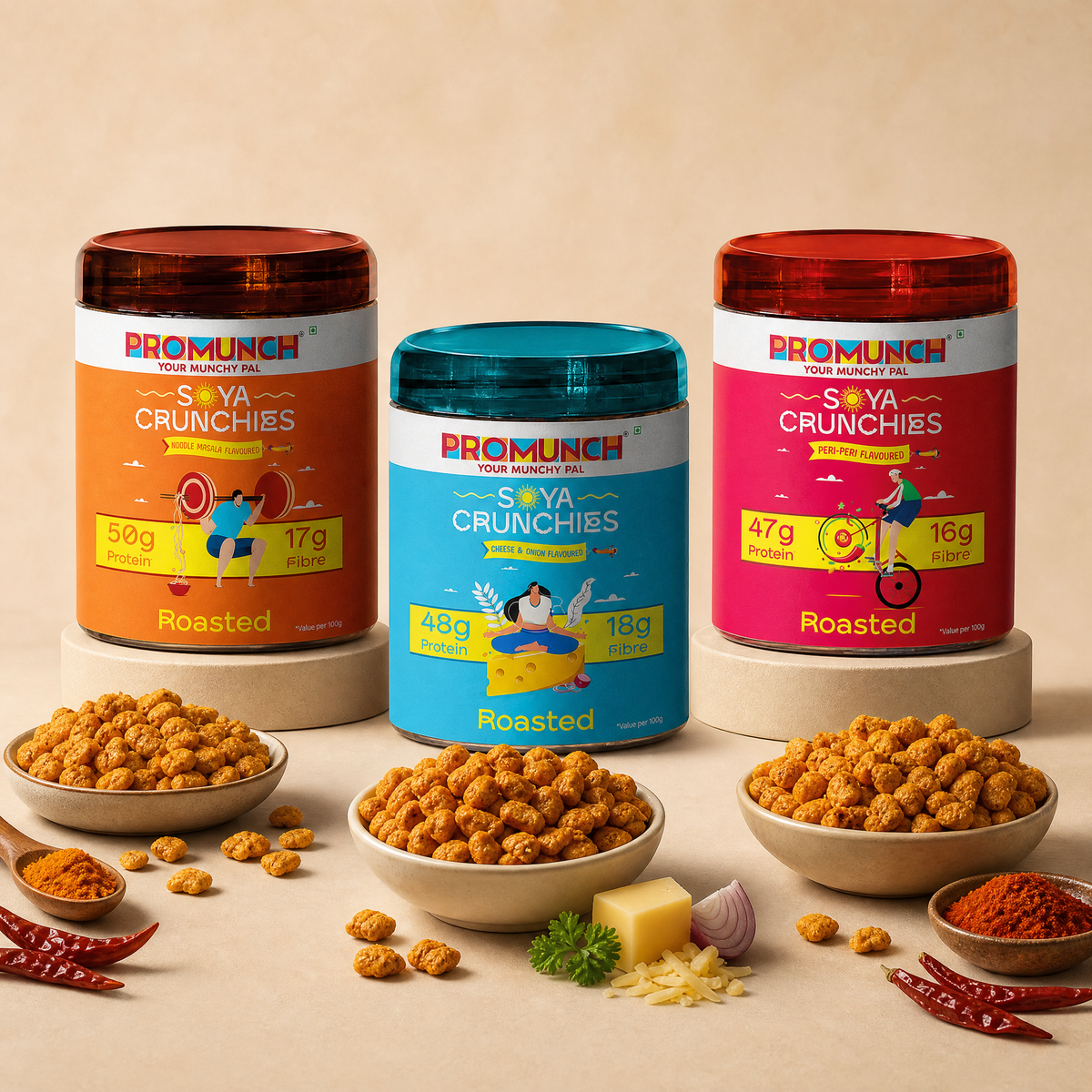
Roasted Edamame vs Soya Crunchies – Nutrition Comparison
Both roasted edamame and Soya Crunchies are made from soybeans and can provide a good amount of plant-based protein and fibre. However, their nutritional profile can vary depending on the variety of soybean, roasting method, serving size, and seasoning used.
|
Nutrient |
Roasted Edamame |
Soya Crunchies |
|
Protein |
High in plant-based protein |
High in plant-based protein |
|
Fiber |
Good source of dietary fiber |
Good source of dietary fiber |
|
Calories |
Depends on preparation and serving size |
Depends on preparation and serving size |
|
Carbohydrates |
Moderate |
Moderate |
|
Healthy fats |
Naturally contains unsaturated fats |
Naturally contains unsaturated fats |
|
Texture |
Light, crunchy and crisp |
Dense and crunchy |
|
Best suited for |
Everyday healthy snacking |
Protein-rich snacking |
Which Has More Protein?
Both can be excellent high-protein snacks, but the exact protein content should be compared using the nutrition label and the same serving size. Different roasting processes and products can have significantly different nutritional values.
For an accurate comparison, check protein per 100 g as well as protein per serving, rather than comparing different serving sizes.
Which One Should You Choose?
The better option depends on your personal preferences and nutritional goals. If you prefer a light, crunchy snack with plant-based protein, roasted edamame can be a convenient choice. If you prefer a denser, more traditional roasted soybean snack, Soya Crunchies may suit you better.
For either option, choosing products with simple ingredients, moderate sodium, and no unnecessary added ingredients can help you make a better everyday snack choice.
Taste & Texture
Taste and texture can make a big difference when choosing between roasted edamame and Soya Crunchies.
Roasted edamame generally has a light, crispy and crunchy texture with a mild, nutty flavour. Its different seasonings can make it suitable for people who enjoy flavorful snacks.
Soya Crunchies tend to have a denser and firmer crunch with a stronger nutty taste.
The better option ultimately depends on personal preference. If you prefer a crisp, convenient snack with different flavour options, roasted edamame can be an appealing choice.
Which Is Better for Weight Management?
Neither roasted edamame nor Soya Crunchies should be considered a magic weight-loss food. Weight management depends on your overall diet, portion sizes, physical activity, and daily calorie intake.
However, choosing a snack that provides protein and fibre can make it easier to build a more satisfying snack routine. Instead of automatically choosing fried or highly processed snacks, you can consider a measured serving of roasted edamame or Soya Crunchies.
If you're watching your calorie intake, pay attention to serving size, calories, added oil, and seasoning, rather than choosing a snack based only on its name.
Which Is Better for Fitness & Protein Intake?
For people who exercise regularly, both options can be useful as plant-based protein snacks. Protein plays an important role in supporting muscle maintenance and recovery as part of a balanced diet.
Roasted edamame can be particularly convenient because it is ready to eat, easy to carry, and provides plant-based protein in a crunchy snack format.
For fitness goals, however, the most important factor is your overall daily protein intake, not simply choosing one snack over another. Check the nutrition label and choose the option that fits your individual nutritional requirements.
Which Is Better as an Everyday Snack?
For everyday snacking, convenience, taste, nutrition, and portion size all matter.
Roasted edamame can be a practical everyday snack because it is crunchy, ready to eat, and easy to carry to the office, college, gym, or while travelling. It can also be used as an alternative to traditional fried snacks when you want a high-protein, plant-based snack.
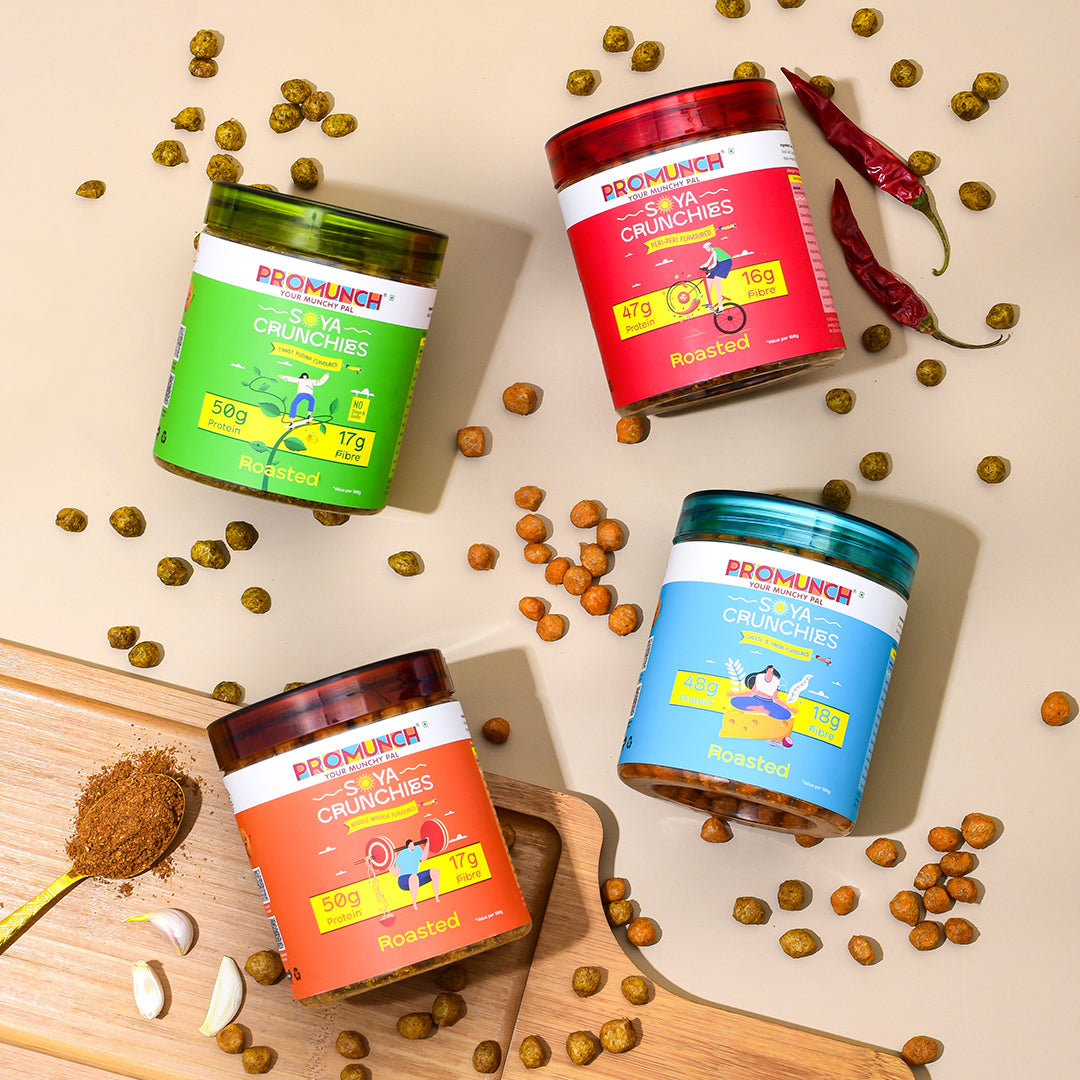
Soya Crunchies can also work well as a protein-rich snack, particularly for people who enjoy a denser crunch and nutty flavour.
The best everyday snack is ultimately the one that fits your taste preferences, nutritional needs, and portion size.
Roasted Edamame vs Soya Crunchies – Quick Comparison Table
| Feature | Roasted Edamame | Soya Crunchies |
|---|---|---|
| Protein | High in plant-based protein | High in plant-based protein |
| Fiber | Good source of fibre | Good source of fibre |
| Texture | Light and crispy | Dense and crunchy |
| Taste | Mild, nutty and versatile | Rich, nutty flavor |
| Convenience | Ready-to-eat snack | Ready-to-eat snack |
| Best for | Healthy everyday snacking | Protein-rich snacking |
| Flavor options | Available in different seasonings | Depends on the product |
| Portion control | Easy to serve as a snack | Easy to serve as a snack |
Which One Should You Choose?
Choosing between roasted edamame and Soya Crunchies comes down to your personal preferences and nutritional goals.
If you want a crunchy, convenient, plant-based protein snack with different flavour options, roasted edamame can be a great choice. If you prefer a denser texture and stronger nutty flavour, Soya Crunchies may be more suitable.
Whichever option you choose, look at the nutrition label, ingredients, serving size, and sodium content before making your decision.

Why Choose PROMUNCH?
PROMUNCH offers both options, so you don't have to choose just one. Whether you want the light crunch of roasted edamame or the denser bite of Soya Crunchies, both are designed for people who want a convenient, protein-packed snack for everyday eating.
Enjoy them at the office, during travel, between meals, or as part of your post-workout snack routine. With different flavours available across both ranges, you can choose the option that matches your taste.
Frequently Asked Questions
Is roasted edamame healthier than Soya Crunchies?
Both can be nutritious plant-based snacks and provide protein and fibre. The better choice depends on the specific product's nutrition profile, ingredients, serving size, and your personal dietary needs.
Is roasted edamame high in protein?
Yes, roasted edamame can be a good source of plant-based protein. The exact amount varies by product, so check the nutrition label for protein per serving or per 100 g.
Are roasted edamame and Soya Crunchies the same?
They are both made from soybeans, but they differ in the type and maturity of the soybeans used, which can affect their textures and eating characteristics.
Can I eat roasted edamame as an everyday snack?
Yes, roasted edamame can be included as part of a balanced diet. Keep your serving size in mind and choose products that fit your nutritional requirements.
Is roasted edamame good for fitness?
Roasted edamame can be a convenient high-protein snack for active people. However, your overall daily protein intake and balanced diet are more important than relying on a single food.
Which is better for weight management: roasted edamame or Soya Crunchies?
Neither is automatically better for weight management. Consider calories, protein, fibre, serving size, and added ingredients when choosing between them.
How should I choose between the two?
Check the protein, calories, fibre, sodium, ingredients, and serving size on the nutrition label. Choosing a product with simple ingredients can make it easier to fit into a balanced snack routine.